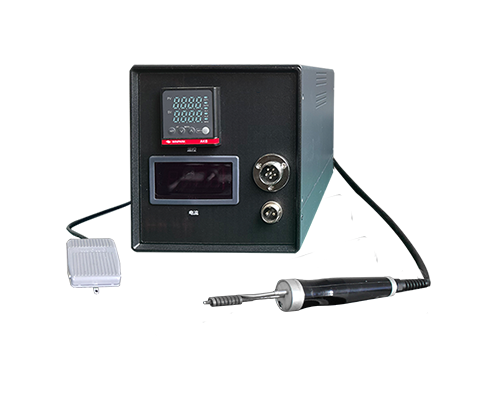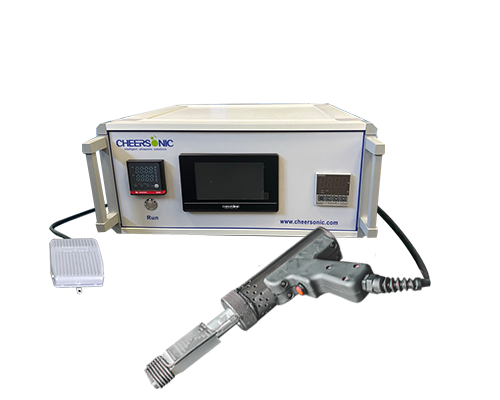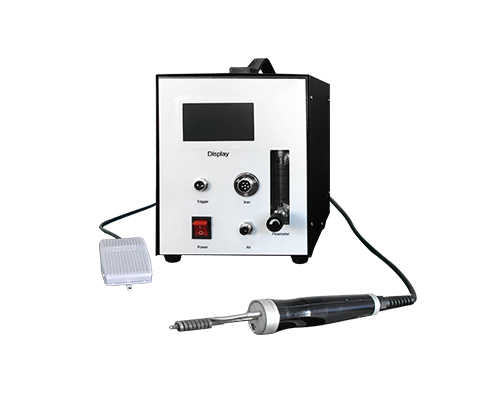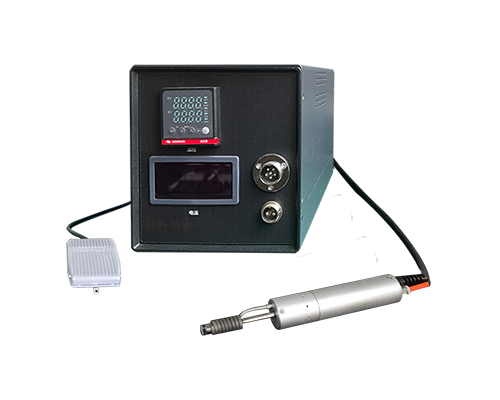
In modern manufacturing, breakthroughs in material joining technologies often serve as the key to industrial upgrading. Ultrasonic brazing, as an efficient processing method, has successfully broken through the connection barriers between different materials with its unique technical advantages, achieving diversified material combinations from metals to non-metals, and providing strong support for the innovative development of various industries.
The core principle of ultrasonic brazing lies in utilizing high-frequency vibration energy to generate minute friction and heat at the brazing interface, causing the filler metal to melt rapidly and wet the base material surface, ultimately forming a strong metallurgical bond. Compared with traditional brazing processes, this technology does not require heating the entire workpiece at high temperatures but only generates heat locally at the connection interface, effectively avoiding material performance degradation and deformation caused by high temperatures. It is particularly suitable for the connection of heat-sensitive materials.
Its most significant advantage lies in its wide material compatibility. For metal materials, ultrasonic brazing can reliably connect common non-ferrous metals such as aluminum and copper. Aluminum's surface is prone to forming a dense oxide film, which is a challenge for traditional welding methods. However, the vibration energy of ultrasonic waves can break through this barrier, allowing the filler metal to directly contact the base material and form a high-strength joint. Copper, with its excellent thermal and electrical conductivity, can be connected quickly by ultrasonic brazing without affecting the electrical and thermal conductivity of the joint.

Beyond metals, ultrasonic brazing also excels in the connection of non-metallic materials. Silicon, a core material in the semiconductor industry, is brittle and prone to damage, posing significant challenges for connection processes. Ultrasonic brazing, through precise control of vibration parameters and heat output, can achieve seamless connections between silicon and metals or other semiconductor materials without damaging the silicon's crystal structure, providing possibilities for the miniaturization and integration of semiconductor devices.
In the connection of high-performance materials such as ceramics and carbides, ultrasonic brazing demonstrates irreplaceable value. Ceramics are hard, heat-resistant but lack toughness, while carbides have excellent wear and corrosion resistance. Traditional connection methods struggle to balance connection strength and material integrity. Ultrasonic brazing promotes chemical reactions between the filler metal and the surfaces of ceramics and carbides through high-frequency vibration, forming joints that are both strong and stable, and is widely used in high-end equipment and electronic devices.
From electronic manufacturing to aerospace, from new energy equipment to precision machinery, ultrasonic welding technology, with its wide material compatibility and efficient, environmentally friendly processing advantages, is becoming an indispensable key process in modern manufacturing. With continuous technological upgrades, its potential in more special material connection scenarios will be further unleashed, continuously injecting impetus into material innovation and industrial upgrading.