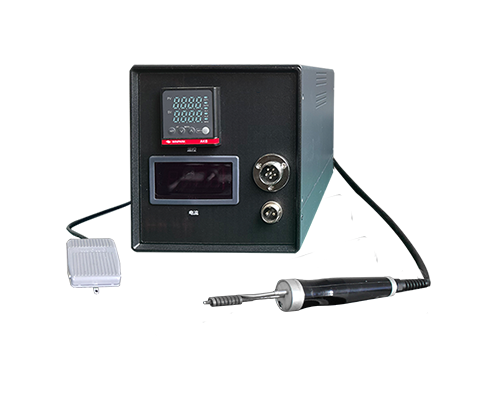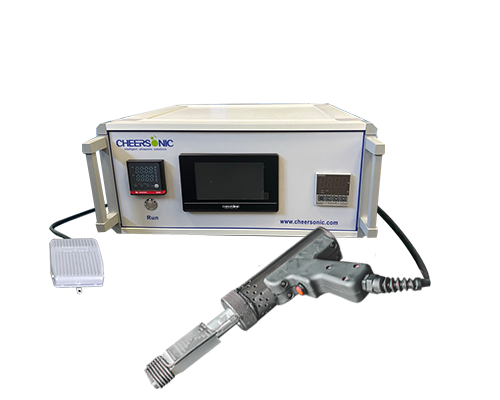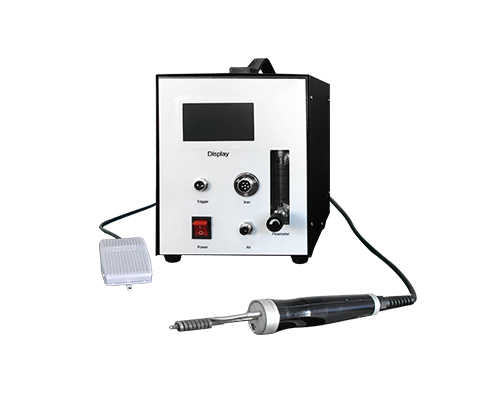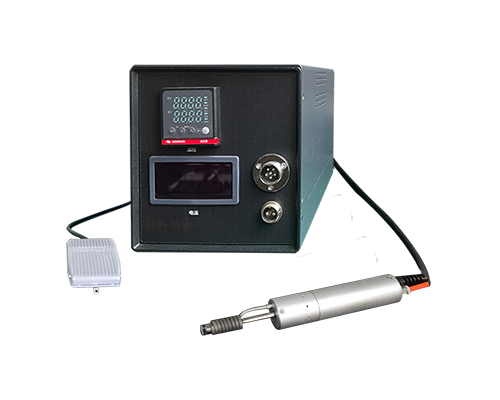
In the field of electronic manufacturing and repair, two main problems have long plagued technicians: first, assembled circuit boards requiring rework, where traditional soldering tools easily damage surrounding components; and second, solder pads oxidized due to long-term storage and humid environments, where conventional heating methods struggle to break through the oxide layer, failing to form reliable solder joints. The emergence of ultrasonic soldering machines has become a powerful remedy for these two major problems.
The core advantage of ultrasonic soldering machines stems from their unique working principle. Instead of relying solely on high-temperature heating, it combines high-frequency mechanical vibration with moderate heat. At the moment the solder contacts the solder pad, the vibrational energy quickly breaks down the oxide layer and contaminants on the pad surface, while simultaneously allowing the molten solder to fully wet the metal substrate. This dual effect of "vibration + heating" avoids damage to other components on the circuit board caused by overheating in traditional soldering, easily overcomes the soldering challenges of oxidized solder pads, and achieves high-quality soldering without relying on large amounts of flux.
The precision of ultrasonic soldering machines is particularly outstanding in scenarios involving the rework of assembled circuit boards. When using traditional soldering irons or hot air guns to repair PCBs, heat can easily diffuse to adjacent small components such as capacitors and resistors, leading to component failure or solder pad detachment. Ultrasonic soldering machines, however, can precisely focus their soldering head on the solder joint to be repaired, concentrating vibration energy on a localized area. This results in shorter heating time and controllable temperature, allowing for solder joint repair while maximizing the protection of the integrity of surrounding assembled components. Many electronics repair businesses have reported that using ultrasonic soldering machines has increased the success rate of PCB repairs from around 70% to over 95%, significantly reducing repair costs.

Ultrasonic soldering machines demonstrate an irreplaceable advantage in treating oxidized solder pads. Oxidized solder pads form a dense oxide film. With traditional soldering, the solder cannot make contact with the metal substrate, resulting in a "cold solder joint," affecting circuit conductivity. The vibration energy of ultrasound directly breaks down the oxide film, allowing the solder to bond tightly to the metal layer of the solder pad, forming a strong solder joint without bubbles or gaps. More importantly, this method eliminates the need for highly corrosive flux, avoiding long-term corrosion of the circuit board by flux residue and extending the lifespan of electronic devices.
As electronic components become increasingly miniaturized and denser, the limitations of traditional soldering tools will become increasingly apparent. Ultrasonic soldering machines, with their unique advantages in reworked boards and oxidized pad treatment, will undoubtedly become indispensable core equipment in the electronics manufacturing and repair field, providing reliable solutions to more soldering challenges.