As consumer electronics and automotive electronics upgrade towards miniaturization, thinning, and flexibility, flexible printed circuit boards  and rigid-flex boards, with their flexible form factor and efficient space utilization, have become key carriers for core components in smart terminals and automotive modules. However, the unique structure of these two types of boards presents unavoidable challenges to the soldering process.
Unlike traditional rigid circuit boards, the pads of flexible printed circuit boards and rigid-flex boards generally adopt a through-hole design. While this structure reduces board thickness and increases flexibility, it loses the soldering positioning and stress dispersion effects of through holes. Simultaneously, their substrates are mostly flexible materials such as polyimide, which have limited high-temperature resistance. The high-temperature environment of conventional soldering easily leads to substrate deformation and aging, and even causes pad lifting and detachment, directly reducing product yield and shortening lifespan. For a long time, the industry's commonly used hot air soldering and soldering iron soldering processes have been caught in a dilemma: excessively high temperatures damage the substrate, while excessively low temperatures result in weak solder joints. Furthermore, traditional processes are inefficient and difficult to meet the demands of mass production.
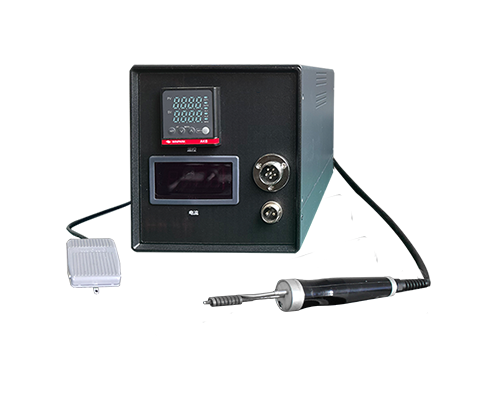
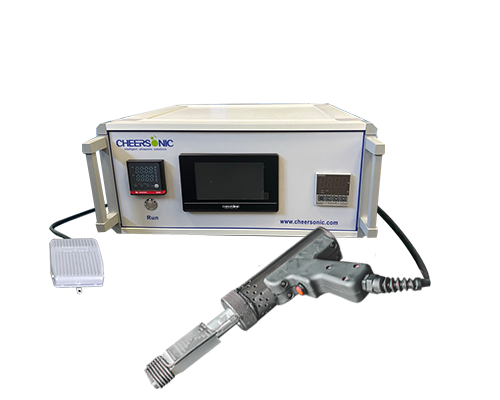
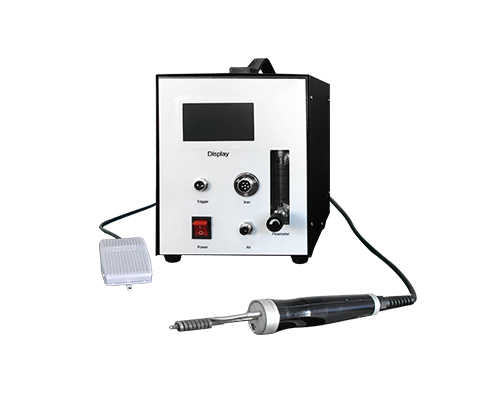
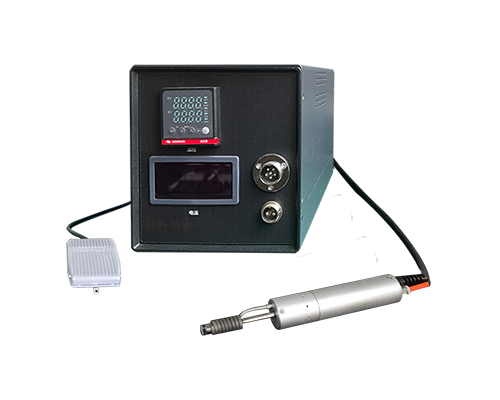
Against this backdrop, ultrasonic soldering machines, with their core advantages of "fast, low-temperature, and high-strength," have become a key solution to this challenge. Their core principle does not rely on external high-temperature heating, but rather uses high-frequency ultrasonic vibrations (20kHz-60kHz) to convert mechanical energy into localized heat energy, allowing the solder to melt rapidly at a lower temperature and wet the pads. This "low-temperature soldering" characteristic fundamentally avoids damage to flexible substrates caused by high temperatures, effectively preventing substrate deformation and pad lifting. Simultaneously, ultrasonic vibration enhances solder fluidity, achieving uniform wetting even on pads without through-holes, forming a tight metal bond layer and ensuring solder strength far exceeding traditional processes.
Today, the demands for precision and reliability in electronic manufacturing continue to rise. Ultrasonic soldering machines not only solve the soldering pain points of flexible printed circuit boards and rigid-flex boards, but also drive process upgrades in flexible electronics, automotive electronics, and other fields. Through technological innovation, they break through the industry bottleneck of "difficulty in soldering flexible boards," providing solid process support for the development of electronic products towards higher integration and longer lifespans.