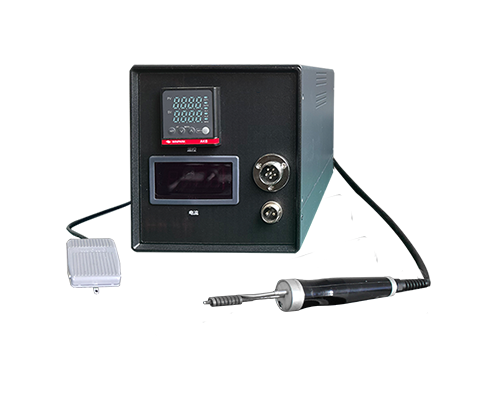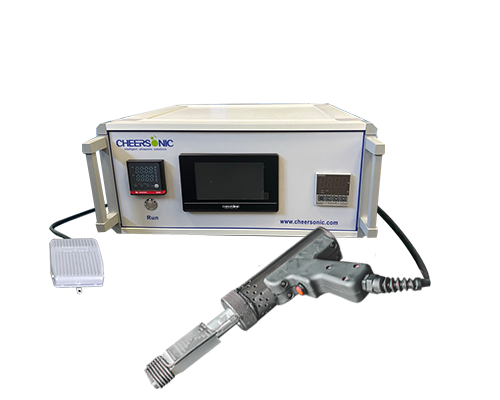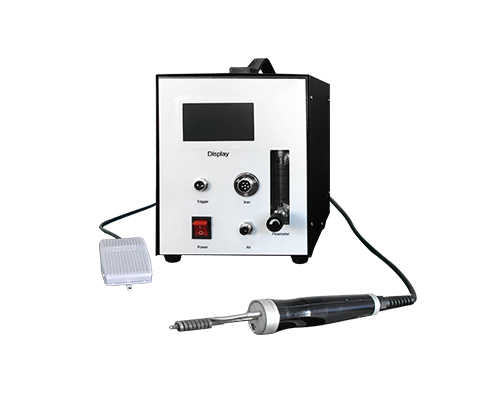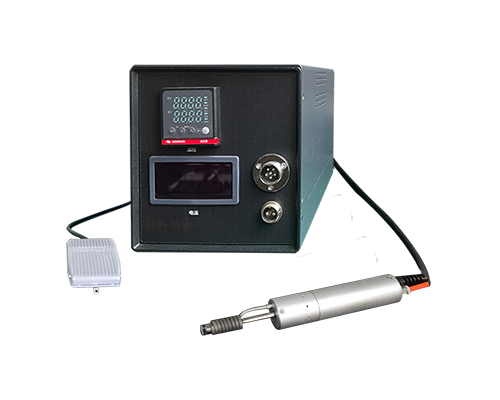
In modern manufacturing, brazing technology is one of the key processes for achieving reliable material joining. Ultrasonic brazing, with its unique energy transfer method, plays a crucial role in precision, low-temperature joining applications. It uses ultrasonic vibration energy to assist in the melting and spreading of the filler metal, eliminating the need for high-temperature flames or electric arcs. This effectively solves the damage problem to heat-sensitive materials caused by traditional brazing and is widely used in high-precision manufacturing fields such as electronics, medical, and aerospace.
1. Working Principle of Ultrasonic Brazing
The core of ultrasonic brazing is the use of high-frequency mechanical vibration (typically 20kHz-60kHz) to achieve material joining. The specific process can be divided into three stages:
Energy Transfer Stage: The ultrasonic transducer converts electrical energy into mechanical vibration, which is amplified by the amplitude transformer and transmitted to the welding head. The welding head then applies the vibrational energy to the contact surface between the workpiece and the filler metal.
Interface Activation Stage: High-frequency vibration breaks down the oxide layer and oil contaminants on the contact surface, exposing the fresh metal surface. Simultaneously, it generates localized micro-plastic deformation, increasing the contact area between the workpiece and the filler metal and creating conditions for atomic diffusion.
Brazing stage: Under the combined action of vibration energy and slight pressure, the brazing filler metal (melting point lower than the base metal) melts rapidly and spreads along the contact surface. After cooling, it forms a dense brazed joint, achieving a strong connection between the workpieces.
2. Core Technical Characteristics of Ultrasonic Brazing
Compared to traditional processes such as flame brazing and induction brazing, ultrasonic brazing has significant advantages:
Low-temperature connection: No high-temperature heat source is required. The base metal temperature is typically controlled between 200℃ and 400℃, preventing performance degradation or deformation of heat-sensitive components (such as electronic chips and plastic substrates) due to high temperatures.
Oxidation-free welding: The vibration process can remove the oxide layer at the interface in real time, eliminating the need for additional flux (or requiring only a small amount of environmentally friendly flux), reducing welding pollution, and improving the corrosion resistance of the joint.
High precision and controllability: Vibration parameters (frequency, amplitude) and pressure can be precisely adjusted, enabling precise connection of small-sized workpieces (such as metal wires with a diameter of 0.1mm), with post-weld joint deformation of less than 0.01mm.
High efficiency and energy saving: Short welding cycle (typically 0.5s-5s per weld), energy utilization rate is more than 30% higher than traditional brazing, making it suitable for mass automated production.

3. Application Scenarios of Ultrasonic Brazing
With the above characteristics, ultrasonic brazing plays an irreplaceable role in several high-requirement fields:
Electronics Industry: Used for connecting semiconductor chips to substrates, welding lithium battery tabs, and fixing micro-sensor leads, preventing damage to electronic components from high temperatures and ensuring circuit stability.
Medical Devices: In the connection of precision instruments such as stainless steel scalpels and dental implants, it can achieve impurity-free, high-cleanliness joints, meeting the sterility requirements of the medical field.
Aerospace: For thin-walled connections of lightweight alloy components such as titanium alloys and aluminum alloys, it can reduce structural deformation caused by thermal stress, improving the lightweight and reliability of aircraft components.
As the manufacturing industry upgrades towards precision and green manufacturing, ultrasonic brazing technology is developing in three directions: first, integrating with automated equipment to develop multi-station linkage welding systems to meet the needs of large-scale mass production; second, adapting to new materials, such as optimizing vibration parameters and brazing filler metal formulations for difficult-to-weld materials like carbon fiber composites and ceramics; and third, miniaturization applications, achieving nanoscale connections within microelectronic devices through micro-welding head design, thus contributing to the upgrading of high-end manufacturing industries.
Overall, with its advantages of low temperature, high precision, and environmental friendliness, ultrasonic brazing has become an indispensable joining technology in modern precision manufacturing and will demonstrate broad application potential in more emerging fields in the future.