In the production process of pouch batteries, the packaging stage directly determines the battery's safety and performance stability. The tab processing steps before packaging—shaping and pre-welding—are a crucial step in ensuring battery quality. As the core component connecting the internal battery cell to the external circuitry, the state of the tabs directly affects the subsequent packaging effect. Improper handling can easily lead to serious quality problems such as short circuits. Therefore, precise and efficient tab shaping and pre-welding processes are indispensable in pouch battery production.
The core objective of the tab shaping process is to optimize the tab shape, laying the foundation for subsequent processing. During tab processing, burrs are easily generated on the tab edges due to cutting, stamping, and other processes. Simultaneously, multiple sets of tabs may also experience positional misalignment. If these problems are not addressed promptly, during the packaging stage, burrs may pierce the battery separator, and misaligned tabs will cause packaging misalignment, leading to internal short circuits and seriously threatening battery safety. Therefore, tab shaping requires precise deburring using specialized equipment to ensure smooth and flat edges. Simultaneously, multiple tabs must be aligned and calibrated to guarantee their positional accuracy meets packaging standards, thus mitigating safety hazards from the outset.

The pre-soldering process plays a crucial role in fixing the tab's position, serving as a key bridge between shaping and packaging. Pre-soldering does not achieve final conductive connection of the tabs, but rather temporarily fixes them after shaping through light welding, preventing repositioning due to external forces during subsequent packaging. This process demands extremely high welding precision and strength: insufficient welding strength will fail to effectively fix the tabs, still posing a risk of misalignment; excessive welding strength may damage the tab material, affecting its conductivity, or even causing tab breakage, resulting in significant losses in battery production.
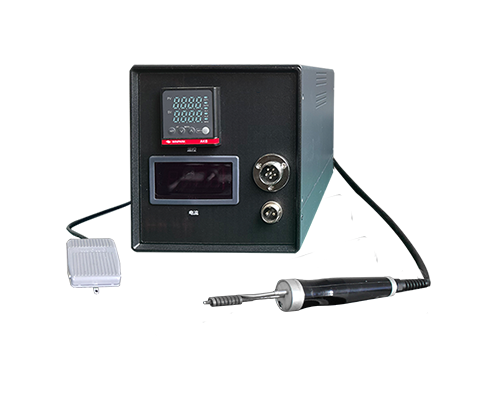
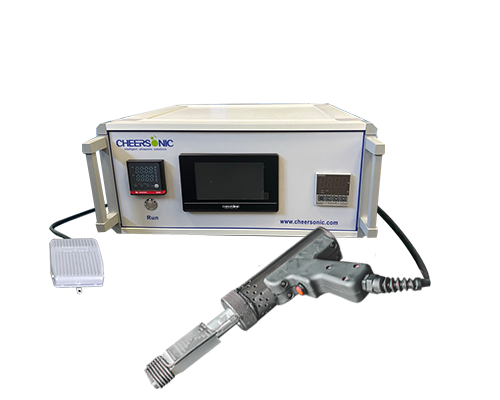
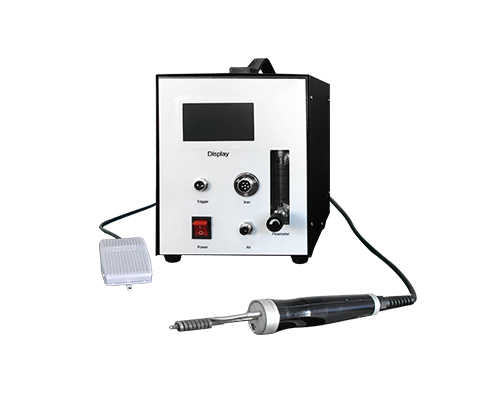
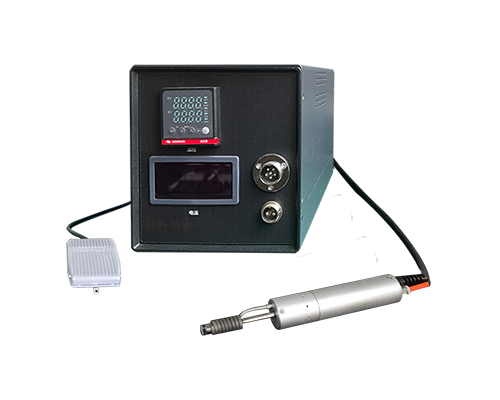
In this critical process, ultrasonic soldering irons, with their unique low-power mode, become the ideal tool for tab pre-soldering. The low-power mode allows for precise control of welding energy, achieving light welding fixation of the tabs while effectively avoiding damage caused by overheating, ensuring the structural integrity and conductivity of the tabs. Furthermore, the low-power soldering of ultrasonic soldering irons ensures the precision of the tab placement, maintaining the correct posture throughout the subsequent packaging process. This further reduces the risk of packaging misalignment and provides a solid guarantee for the high-quality production of pouch batteries.
From the perspective of the overall production process, although tab shaping and pre-soldering are preliminary preparation steps, they have a profound impact on the quality of pouch batteries. By strictly controlling the shaping accuracy, optimizing the pre-soldering process, and combining it with the application of advanced tools such as ultrasonic soldering irons, the safety and reliability of pouch batteries can be significantly improved. This creates favorable conditions for the smooth progress of subsequent packaging and final soldering processes, driving the pouch battery industry towards higher quality and greater stability.